Εμφάνιση αναρτήσεων με ετικέτα Ozzy Osbourne. Εμφάνιση όλων των αναρτήσεων

Δευτέρα 19 Ιουλίου 2021

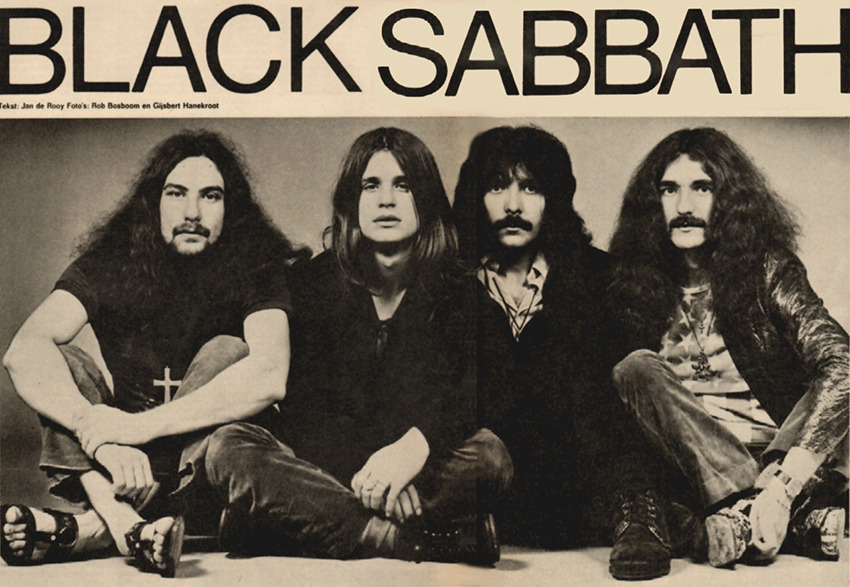
BLACK SABBATH in 1971: Master of Reality and the end of innocence.


Written by Andreas Andreou


SATAN, COCAINE, GOLDEN RECORDS, USA: 1971 ON THE ROAD.

During 1970, Black Sabbath released two albums (Black Sabbath, Paranoid) and from small clubs they went on to tour in the United States while their albums met a huge commercial success despite the negativity of critics and the press that couldn't see at that moment what was happening. Reviews of the albums at the time were savage. The key to commercial success though, always had to do with the USA too; if a band managed to tour in the USA and enter the charts, success was in sight.

The United States of America was a completely different world than Europe and England half a century ago, and the 22-year old fellas from Birmingham got to learn about it and even changed their perspective of the world. When you travelled in the USA in 1971, you could see headlines about Ku Klux Klan bombing school buses, a bomb on a plane, a bomb here and there, the Attica Prison riot, and of course the Vietnam War was still raging. But 50 years ago, there were more things that nowadays sound like they don't matter or they're just "old news" and a "stupid thing". In 1971 in the USA, you had the sentence of Charles Manson after the "trial of the century", and you could also see the founder of the Church of Satan, Anton LaVey, in the cover of the famous Look magazine. "It's a satanic world", Geezer Butler told Rolling Stone magazine that year, and Satanism was a "thing" back then in the USA. "Satan" was a word mentioned with fear in the society half a century ago. Things were different.


In that world (the USA), Ozzy Osbourne, Tony Iommi, Geezer Butler and Bill Ward met all kinds of weirdos and people who invited them to Satanic ceremonies and black magic gatherings since they had the fame of devil-worshippers. They got praise from followers of Charles Manson, even Anton LaVey himself, who (according to Tony and Ozzy) arranged a black magic parade in San Francisco honoring the band with a "Welcome Black Sabbath" banner. They never really understood it but that was America; A different world. And keep in mind that we're talking about something different: That was the context of the world half a century ago.

Years later, the Church of Satan said that the black magic parade was a myth, but in this world, Black Sabbath was often related with black magic and Satan even if they had just a handful of songs about Old Nick and they always denied every connection with that - they even made fun of it. They had a dark vibe, a presence of an invisible fifth member and the Devil's interval, the tritone, and THE RIFF, but that's all; it just gave birth to Heavy Metal.

However, when Ozzy parted ways with the rest and everyone entered the '80s, things changed, heavy metal music became something different and both parties (Ozzy in his solo career and what Iommi did with the Black Sabbath moniker) embraced the dark image and all those myths. Ozzy became the bat-biting Prince of Darkness and sung songs about Aleister Crowley and Manson's murders, while Tony Iommi wrote riffs about the hill of the headless cross and Satan, even added a red devil baby in the cover of a Sabbath album. Well, they kept wearing crosses, just like those Ozzy's father made for the original 4 in the early days that were supposed to keep them safe from evil eyes and evil possessors but things really changed in the '80s. According to the "image", Tony Iommi made most of the people that entered the Sabbath timeline in the '80s wearing crosses, just like those Ozzy's father brought. That was the '80s, the second decade of cocaine that became the devil's daughter for both Ozzy and Tony who were seduced by her, but let' go back to 1971...

Black Sabbath started writing the first new songs on the road, while touring in the UK (with a short visit in Australia for the Myponga Pop Festival) but they stopped since the management and labels asked them to visit again the USA for touring since Paranoid got its US release by Warner Bros. Records a few months later than the Vertigo UK & European release. The band played in the USA until April, and a few shows followed back in Europe with the last one at the Royal Albert Hall in London, England, on April 26th of 1971. The show in Royal Albert Hall was supposed to be during the January British tour but the band was banned because of their image, their lyrics and their music. Promoters were afraid.


In just a few months, both Black Sabbath and Paranoid achieved gold status and a third tour in North America was booked starting in July 1971. Black Sabbath had just a few weeks until May to finish their third album and continue touring, in a schedule that nowadays looks unreal and impossible.


Before even releasing Master of Reality, Black Sabbath had already performed more than 200 shows (sometimes performing two shows at the same day) let alone all those shows during 1968 and the first half of 1969 before changing name to Black Sabbath. While the first US tour was something like a successful experiment, the following ones and the shows they performed, made them one of the biggest bands of the planet. The audience went mad when Ozzy, Tony, Geezer and Bill were on stage and even if that was just the beginning, they were already old dogs but they never stopped learning new tricks. Black Sabbath continued in North America until late-October 1971. When 1971 came to an end, Black Sabbath had already performed an estimated number of 300 shows. Think about it for a while. And it was not just that. They continued touring supporting Master of Reality in the United Kingdom during January and February of 1972 while in late-February they returned to the USA for more shows until April 1972, adding an estimated number of 50 more shows!

We've said the USA changed the band's perspective of the world. They were already introduced to marijuana and different kinds of pills but in the world of America the hard-line drug-dust came in front of them just like pizza and all those groupies, weirdos and freaks, among the thousands of fans. Tony Iommi must have been the first one who did cocaine while Bill Ward and Ozzy Osbourne shortly followed during some LA nights. Ozzy was introduced to cocaine by Leslie West of Mountain, a guitarist that was a huge influence for another important person in Ozzy's timeline: Randy Rhoads.

Master of Reality was certified gold from advance sales before it was even released. In a period of two years, from late-1969 to late-1971, Black Sabbath shaped different heavy genres of music, inspired countless people, released three albums and went from small clubs in England to headline shows of thousands in the USA. That was the end of innocence and the beginning of a new era. "I feel the band is getting very influenced by the American trip", Ozzy said to Melody Maker in 1972, when they were somehow relocated in the United States, and influence for every new song was coming from the world. It was just a different new world, so that's what the music was about: the daily life and social chaos, drugs, pollution, war and evil, supernatural and the afterlife. Still though, there were also moments of happiness and love within those songs.

 Black Sabbath at Central Park, NYC. August 15, 1971 (photo by Bob Gruen)


WHEN WAS "MASTER OF REALITY" ACTUALLY RECORDED?

The most confusing thing is the period the album was actually recorded. According to various sources, Master of Reality was recorded during February-April 1971 in Island Studio in London, while Tony Iommi wrote in his biography Iron Man (First Da Capo Press paperback edition, 2012, page 94) that the album was recorded in February and March of 1971, and he's also mentioning they had two weeks to record Master of Reality. In the kind of life of people like Tony, Ozzy, Geezer and Bill, exact dates are not something that's really certain when they're asked about it.

For sure, the album was recorded in London with producer Rodger Bain for the third and final time, and Tom Allom engineering. But it wasn't recorded during March, since by mid-February until early-April, Black Sabbath were touring in North America. Then, they returned to Europe for a few more European dates in Scandinavian countries with the last one in London, England, on April 26th of 1971. So, the album is either recorded after that date in May or June of 1971, or before February 1971, or just those few days during early April after the North America tour and before the few European dates.

So, when was Master of Reality recorded? Maybe they worked on a few basic tracks after Christmas of 1970 up to early January 1971 but surely entered the studio early-February for a few days. The final recordings were probably in a week during early April and/or completed in May 1971.

The album was released in both the UK and the USA on July 21, when they were already back in the United States for another major tour.


THE ALBUM. THE SONGS. THE LEGACY.

Recorded with producer Rodger Bain, the album is the perfect follow-up to Black Sabbath and Paranoid. Primal and gloomy, heavy and honest, Master of Reality is the end of innocence for the band members before they will move on to more ambitious and experimental albums as established rock stars, without any specific few-days recording limitation from record companies and management, or producers like Bain claiming part of their glory.

Down, down, down-tuned, Master of Reality was the heaviest album on earth upon its release. The heaviest thing the world witnessed up to that moment. It was the year where the term "heavy metal" also started appearing in magazines more often and found its true meaning in describing that specific genre-defining album that became the blueprint for all-things heavy, different sub-genres and music styles that followed years (even decades) later. Master of Reality was the heavy metal music of its time.

However, a few people and writers are often confused and believe that Tony Iommi down-tuned his guitar for the album but that's not really correct. Iommi did it in just three songs: "Children of the Grave", "Lord of This World" and "Into the Void". "They were played with guitars detuned three semitones to sharp C", an expert - musician would say, and I guess that's the exact musical term for what Iommi did. But why did he do it? After countless live shows and days on stage, the pain in his chopped fingertips was constant. The sound was already heavy but with the down-tuning he reduced the string tension and that was easier for him to perform the mammoth riffs. Then, Geezer Butler also down-tuned his bass to match the Riff Master and Ozzy started singing higher to balance everything.

Today, there are many audio engineers and people in the music industry, and when something (very) heavy and sludgy appears, sometimes, someone will say "it's not properly recorded", while others are lost in overproduced albums that you can't really listen to all the instruments and music elements properly. Labels didn't change Black Sabbath's music, and "social media experts" of the modern age was something that didn't exist, but it would be fun to have them back then speaking about "a bad production", "average vocals" and "sloppy playing". Thankfully, 50 years ago nobody affected Sabbath's sound and the history of music changed. With all its "faults", the "you can't do that!", and "maths" that are not right; because simply, music is not just maths and it can be something more. Frank Zappa once explained it better. In the end, Black Sabbath really did everything their way. With weird riffs for the time, different changes, sounds and tempos "that's not going to work!" even within the same track. They made it work. Thankfully.


There wasn't any single prior to the release of Master of Reality. "Paranoid" (the song), a last-minute track requested by the label for the previous album, was a huge hit, but Black Sabbath had a different perspective and they never repeated it or looked for it in the '70s; the "hit", a label wanted. They even talked to the press about those pop "screaming kids" you could see in mainstream acts. "We don't need those fans. And we're not changing our act just to please kids who bought the single", Sabbath's comment was in the Disc and Music Echo magazine.

Inspired by the "It's the sweetest leaf" slogan of Sweet Afton cigarettes from Ireland, "Sweet Leaf" begins with Tony Iommi's echo-coughing after a big joint offer by Ozzy and taped in the studio. The blueprint song for the '90s heavy and stoner rock music is a love song but it doesn't involve people, just the love for marijuana ("I love you sweet leaf"). Just like "Sweet Leaf", "After Forever" was also a song raising controversy with lines like "would you like to see the Pope on the end of a rope - do you think he's a fool?" but the song is not against Christ and God, it is just a song criticizing the Catholic Church and the "people like you that crucified Christ". Geezer Butler, a raised Catholic, writes "they should realize before they criticize, that God is the only way to love" giving also one of the first lyrical contents to '80s bands like Trouble but also white (or Christian) metal.

"Embryo" just serves as the intro to "Children of the Grave", "a little classical thing to give it all a little space and create some light and shade" as Tony Iommi writes in his autobiography. Of course, while Sabbath was all the time on the road and with all previous song ideas used in the first two albums, they have limited time writing new songs, so those small instrumental parts, besides sharing a similar purpose, the out-of-the-box light in darkness and gloomy vibe, were bits that extended the album's tracks. And then, you have one of the most iconic Sabbath (and heavy metal in general) tracks, "Children of the Grave". Arriving from a working-class life at the height of the Vietnam War, Black Sabbath echo the world of late-60s and early-70s from the eyes of the youth. In the first verse, Ozzy sings about children who start to march against the world in which they have to live, and in the last verse, he talks to them: "Show the world that love is still alive, you must be brave, or you children of today are children of the grave". It's a warning to the children of that era, the kind of song that the youth of the early-70s was connected with, felt and loved, despite the criticism of the media against Black Sabbath. Having a Hammer Horror vibe, this song is a work of genius, from Iommi's galloping riff that influenced almost everything in heavy, epic and power metal in the '80s, to Bill Ward's overdubbed timbales and Ozzy's desperate "yeah!" at the end of each verse. "Children of the Grave" was revolutionary and besides its music, it was lyrically a huge influence for what followed the next years.

"Orchid" is another Iommi acoustic piece, adding light and colour within the shade and darkness, following the revolution of children of the grave before the devil song; one of the few actually Sabbath wrote in the '70s about Old Nick, Satan, the evil possessor that becomes your confessor. "Lord of This World" was a sinister song for the context of 1971. The riff and the change after a few seconds but mainly Ozzy's performance gave that threatening element, adding also the trademark "yeah" in the end of the first verses. It's one of those Sabbath tracks that Ozzy's voice becomes the soul of the song, playing the role of Satan himself, and after the final verse, Iommi and Butler lead the song to glorious heights proving that the chemistry of the original Sab-4 was perfect and was never reached again in such a continuation.

There was a debate for years about who's really singing on "Solitude". Of course it is Ozzy and that was Sabbath's first true love song including flute and piano by Iommi. Ozzy's pessimistic and eerie performance on lines like "the world is a lonely place, you're on your own" is another shivering moment that gives to Sabbath's gloomy vibe a new dimension adding also an ambient element. That's what made Ozzy the voice of Black Sabbath and no one sang the '70s song better. It doesn't matter who has the better voice because Oz is the character for those specific cuts. His voice became the emotion and the feeling of those songs. He became insanity, the drug, the loss and the depression, the anger, the possessed. You can't control those feelings, therefore you must be them in order to be convincing, and Ozzy was all of them.

And finally, you have the end of the world. "Into the Void", the apocalyptic horror with pollution killing the air, hate and fear bringing mankind to the final suicide, leaving the earth to Satan and his slaves. Just a few freedom fighters escaped the brainwashed minds and those could be the warned children of the world that escaped the grave. Lyrically, this is another song - warning, while musically, it is one of the greatest moments of Black Sabbath with incredible work by Iommi, and Butler matching the riff behind him.

The Sabbath influence and inspiration was instantly spread all over the world and this is recorded and documented. This is one of the very rare cases in the history of music; Black Sabbath was a revolution. When they toured Europe in 1969, people (fans and other bands) already started talking about "those" songs, without even having an album out and when the debut album was released, everything changed. Instantly.

The Flower Travellin' Band from Japan (!) released their debut album Anywhere just a few months after Sabbath's debut in 1970 and they covered "Black Sabbath" (the track) already, while Ronnie James Dio was already covering live "War Pigs" with The Elves. The Sabbath sound-factor was everywhere already. In 1971, when Master of Reality was released and became the heaviest album in the world, they were already an established and influential band, and the Black Sabbath albums were released everywhere. There are pressings of the first three albums, even in territories like New Zealand, Israel, South Africa, Lebanon, Mexico, Colombia, Venezuela, Taiwan and Philippines, released there already until 1971.


THE "HIDDEN" SONGS.

The known track list of Master of Reality when it was released from Vertigo is: 1. Sweet Leaf, 2. After Forever, 3. Embryo, 4. Children of the Grave, 5. Orchid, 6. Lord of This World, 7. Solitude, 8. Into the Void. However, in the first US pressings of Warner Bros, the Master of Reality tracklist appears as: 1. Sweet Leaf, 2. After Forever (including The Elegy), 3. Embryo, 4. Children of the Grave, 5. The Haunting, 6. Orchid, 7. Step Up, 8. Lord of This World, 9. Solitude, 10. Deathmask, 11. Into the Void. While there are countless pressings of the Black Sabbath albums, sometimes those "secret" and "hidden" songs look like separate tracks but what they really are?

Nothing new. Those are actually "ghost" titles. Mostly appearing in North America pressings, Warner Bros. Records wanted more songs because of their publishing deal, so Black Sabbath needed to have a minimum of 10 songs/titles per album in order to reach the publishing agreement. Those "extra" titles were never part of the original recordings and were added afterwards. "The Elegy" is the intro - first section of "After Forever" that also reprises within the song, that's why it is mentioned as "including the Elegy". "The Haunting" are the last seconds of "Children of the Grave" with the whispering echo voice of Ozzy, "Step Up" is the intro riff of "Lord of This World" and "Deathmask" is the first part-segment of "Into the Void".

The most interesting part is that those "secret" songs were mostly added on the vinyl labels and not on the albums' sleeves while they somehow disappeared from later US pressings. Back in the day, those "extra" and "secret" songs reached a mythical status confusing most of the people for a while but reality was something different.


THE MISTAKES.

When the album was released, the instrumental tracks ("Embryo", "Orchid") and "After Forever" were credited to Tony Iommi alone for the first time, while the rest five tracks were credited to all of them (Iommi/Butler/Osbourne/Ward) just like before. However, everyone knows that Iommi never wrote lyrics, nor did one tell Ozzy how to sing the vocal melodies, even if during the Sabbath years, many times he sung upon the riff. It is known that the lyrics of "After Forever" were written by Geezer Butler but we don't know why this song was credited to Iommi alone in the beginning. That's what most people say, right?

Well, the credit to Iommi-only could be a mistake of Vertigo Records that handled the UK and European pressings, since in the US pressings of Warner Bros. the credit is correct and includes all names. In different pressings of the album in recent years, the credit has changed to all of them.

A few first pressings had the title on labels like Masters of Reality and that was corrected in future pressings. Among the first pressings with mistaken labels were US, Canadian and German versions, while in German early pressings, they also forgot to add "Embryo" on the labels.

The "hidden" songs also added a mistake that kept going for decades, especially on vinyl pressings. While "Into the Void" was split in two in the early pressings ("Deathmask" and "Into the Void") in the subsequent pressings, the time duration of "Deathmask" (the first part of "Into the Void") was added in the time duration of "Solitude", so the ballad appeared as an 8-minute song. That mistake kept going to many different vinyl pressings even until 2011. Of course, when the vinyl records or compact discs were playing, the time separation between the tracks was correct and the mistake was only mentioned on labels.

The mistakes on names and artists is very common, so there are many early pressings with wrongly written names.

US Warner Bros. Records' first pressings with wrong title (Masters of Reality), "ghost titles" included and "After Forever" correctly credited to all (Iommi mentioned as "Ioomi")


 Early German pressings with wrong title (Masters of Reality), missing title ("Embryo") and "After Forever" credited to Iommi.


 US Warner Bros. Records' early pressings with corrected title, no "ghost titles" (except "The Elegy" that remained), "After Forever" correctly credited to all, and wrong running time for "Solitude".


THE MANY FACES OF THE ALBUM.

There are already around 400 different versions of Master of Reality since July 1971 all over the world, making it one of the most-times released Sabbath albums. The most known cover versions have the purple band logo and the album title in black letters, or black letters with white border, or black letters with purple border. But there are more. Much more than you can imagine and probably we will never see them all.

First vinyl pressing had the Vertigo swirl label on side A and tracklist on side B. Vinyl was in a Vertigo poly-lined inner sleeve and there was also a poster. Instead of a regular cover sleeve, there was a laminated sleeve in the form of a box-envelope opening from the top and bottom. Band logo and album title were embossed on the front cover, while on the back there were printed lyrics and credits. That was also the first time that Black Sabbath lyrics were printed in an album since the previous pressings of Black Sabbath and Paranoid didn't include the lyrics.


EPILOGUE: KILLING THE HIPPY DREAM - A NEW ERA RISES.

The original Sab-4 (©) were raised in the urban and industrial area of Birmingham and when they released the first two albums in 1970, they presented what is considered the beginning of heavy metal. With the third album, Master of Reality, they became the inventors of Heavy Metal and the world of music changed. It was the music, the name, the aura, the lyrics. They had them all, but most important, they also had the RIFF. In those first 6 albums, they played all the riffs that built heavy music offering inspiration for thousands of variations of their riffs that shaped heavy and metal music with all their sub-genres in the '80s, the '90s, the '00s and beyond.

In 1971, when Master of Reality was released and Black Sabbath presented heavy metal in a full primal form, society started changing and Black Sabbath were there to get and return that vibe, the soundtrack of war, nuclear destruction, social struggle and evil. The era of flowers and innocence was gone and critics hated Black Sabbath for "killing the hippy dream". The Woodstock generation and the dream of a better society failed within society itself.

Jimi Henrdix died in 1970, The Beatles broke-up in 1970, a new era started and it's not just "love and flowers". Before Black Sabbath, there was soul, pop, psychedelic rock and the flower pop movement; things the magazines presented. Then, Black Sabbath came and presented something new in its full form. That wasn't just a random heavy riff, one song in one album, just a cover or an image; they had a continuation. And since it wasn't just one element or just a few "heavy" moments or just a song, critics and magazines didn't know how to handle them. There wasn't anything alike before, so this new, heavy music, was considered a "mistake". Critics mocked Black Sabbath but this "mistake" was something really new and revolutionary that youth loved and was taking over everything the critics previously adored.

A new era began and half a century later Master of Reality is among the most important cornerstones of everything that followed in hard, heavy and metal music. Decades later, there are still countless musicians, bands and producers, who’re trying to reproduce the music, the feeling, the performance and the sound of Master of Reality and what the original Sab-4 did in the ‘70s. You can’t beat that.


Δευτέρα 19 Οκτωβρίου 2020

Behind a thin disguise: Savatage in the '80s & the Black Sabbath/Ozzy Osbourne connection; Jon Oliva remembers.

A view in the '80s era of Savatage, the albums, the events and the record companies. A clear view in the Black Sabbath and Ozzy Osbourne connection with Savatage, the influence upon Jon and Criss Oliva and a new exclusive interview with Jon Oliva remembering Black Sabbath, his meeting with Ozzy and the Black Sabbath audition that never happened.

written by Andreas Andreou

Starting in bands like Tower and Alien, and recording the obscure Metropolis (also known as Metropolis USA) 7" single Let's Get Rowdy / Take Off With The Crowd, it was the year 1979 when brothers Jon (Johnathan Nicholas) and Criss (Christopher Michael) Oliva ended with the band name Avatar. When Avatar released City Beneath the Surface 7" EP (including the same-titled track, "The Whip" and "Sirens") with the line-up of Jon Oliva (vocals), Criss Oliva (guitar), Keith Collins (bass) and Steve Wacholz (drums), there were already a few other bands claiming the rights to the name so they changed to Savatage, something unique that no one would claim since no one knew what it really is! Jon, Criss and Criss' longtime girlfriend Dawn Hopkins (later Dawn Oliva) just came up with it one day playing with words... Avatar - Savatar - Savatage!


LET THE BATTLES OF STREET LIFE BEGIN

Dan Johnson of Par Records, a short-lived record label of the early '80s in Florida, already had signed the band for a brief record deal. The first two Savatage releases, the album Sirens and the mini-album The Dungeons Are Calling, were recorded at the same session that took place in one and a half days at the Morrisound Recording Studio. Produced by Dan Johnson and engineered by Jim Morris, those recordings were finally split in two and released in different years.

During that period in the United States, with the huge commercial success of European acts like Iron Maiden, Judas Priest and Ozzy Osbourne, who also influenced the current (then) American metal scene, even a few major labels started looking for heavy metal bands. Among those bands that joined a major label, was Savatage. While there were already a few labels that became interested in Savatage, the band signed with Atlantic for a multi-album deal.

Joining Atlantic Records, was the first career-defining moment and as it happened many times in the '80s, a representative of a label saw that band on stage or just heard about their energy on stage. In the case of Savatage, a show supporting Zebra after the release of Sirens with their energy, the performance, the songs and of course the crowd's reaction was the key; a key element for all the A&R's - "if the crowd likes them, we like them". And that was it. Most of the time it was like that. If you couldn't deliver live and impress those A&R rep's that visited (sometimes incognito) those shows, you probably wouldn't join a major label. American bands like Armored Saint and Twisted Sister are another example. And both are in the top list of the very best US metal bands on stage.

The Morrisound Recording Studio In Tampa, Florida, the birthplace of Savatage, became one of the most iconic studios in the history of metal music in the coming years, with a huge list of recording artists in a wider metal field (death metal included). But during those early years, and after joining Atlantic Records, that "one and a half day" recording session of Sirens / The Dungeons Are Calling seemed like a pre-production procedure. Personally, I love that raw sound of those early releases and cuts like "Sirens", "Scream Murder", "The Dungeons Are Calling" and "By the Grace of the Witch", but when Atlantic let the band record a few demos for the upcoming album at Morrisound, they didn't really like the quality. Those demos included tracks like "Washed Out", "Fighting for Love" "No More Saturday Nights" and "Stuck on You", produced by Rick Derringer. However, Savatage were already in deal with Par Records but Dan Johnson "traded" the release of The Dungeons Are Calling and Savatage were allowed to record those demos for Atlantic.

Savatage and Metallica


It is widely known, and also mentioned in many interviews, that Jon Oliva (besides The Beatles) was a huge Black Sabbath fan. He was even performing Sabbath covers like "Iron Man" and "War Pigs" in his early years. On the other hand, Criss Oliva was heavily inspired by the first two Ozzy Osbourne albums and Randy Rhoads. In the October 1993 issue of the Guitar for the Practicing Musician magazine, Criss Oliva mentions his dream band line-up. Of course, Randy Rhoads is his favourite guitarist, while he also adds Don Airey on keyboards for an extra flavor of Ozzy's early albums' influence.


The irony is that on October 17th of 1993 (the month when that magazine came out), Criss passed away and it's a pity that up to that point he wasn't mentioned in most of the famous guitar magazines.

Criss Oliva and his wife Dawn were driving north on their way to the Fourth Annual Livestock Festival held in Zephyrhills, Florida. An oncoming car of a drunk driver crossed the median and struck Oliva's car. Dawn survived the crash but Criss was killed instantly. The drunk driver survived with minor injuries and was later found guilty of "driving under the influence" manslaughter, serious injury and vehicular homicide. He served only 18 months in prison of a five-year sentence.

Criss Oliva is one of the greatest guitarists in heavy metal music with a unique and recognizable sound, unmatchable tone and feeling. A truly devoted musician and at the same time, the most underrated in the metal universe.

Back in 1985, Atlantic didn't really like the production quality of the Savatage demos recorded by Rick Derringer and the band was joined with producer Max Norman for the recordings of Power of the Night. A producer known for his work with Ozzy Osbourne and albums like Blizzard of Ozz and Diary of a Madman. Criss must have felt very happy recording with Max Norman, the producer of his favourite guitar player and the early Ozzy albums, that heavily influenced him in his early recording years, something that is more than obvious in songs like "Out on the Streets" or that cool orchestration in "Unusual".

No matter how we mostly (probably) prefer Sirens / The Dungeons Are Calling over Power of the Night, Oliva brothers sometimes refer to Power of the Night as their first proper album, since they had the time to record it as they wish and not in a "one and a half day" recording session. With a budget of 100,000 USD and staying in a "haunted" house during the recordings, Jon, Criss, Keith and Steve were living for a few weeks somewhere between a house full of weird things and Bearsville Recording Studios in New York, completing the album Atlantic wanted to present as "the first real Savatage album".

In the album, most of the songs are credited to Criss and Jon Oliva with the contribution of bassist Keith Collins to a few of them and while Criss was inspired and influenced by Randy Rhoads and Ozzy, in the lyrical part, Jon stated (taken from Clay Marshall's liner notes for the album's CD reissue of 2002): "I've always had an infatuation with the dark. At that time, I was very into Sabbath, and into the dark side". Also at that time, before the recordings of Power of the Night, bassist Johnny Lee Middleton was asked to join Savatage but he declined, staying in a Florida bar band with a fixed fee, performing Journey and Bryan Adams covers.

With a new album in a major label, Savatage joined the international music industry, attorneys, booking agents, managers and the Monsters of the Universe Tour, all of them leading to 1986 and the period of the Fight for the Rock album. Savatage had an international record deal and Johnny Lee Middleton was still playing covers in bars but the second time he was asked, he decided to join Savatage and after a few weeks' rehearsals, the band flew to England to record the new album. However, the band felt in a difficult spot and Atlantic had a different idea wanting the Sava-boys to follow a commercial path, leading to an artistic disaster. Even including two covers, "Wishing Well" of The Free and Badfinger's "Day After Day", the children of the metal movement felt in a trap where the supposed heavy metal songs didn't sound metal at all and the commercial tracks sounded like a different band.

The tour that followed the album's release and the post Chernobyl disaster wasn’t disastrous at all, since they joined Ted Nugent and Motörhead on the road and their performance was always on the edge. The sales though were poor and the band was somehow dropped by Atlantic. They almost broke up and thought the end was near... 


JON OLIVA AND THE BLACK SABBATH CONNECTION

When Black Sabbath's Born Again Tour was completed in 1984, Sabbath were on the edge of nothingness and Tony Iommi started working on his first solo album Seventh Star. During an era where record companies were more powerful than you can imagine nowadays, it was said to Tony Iommi that according to his contract, he owed the record company another one Black Sabbath album and they wanted this one. And so it happened. Record label executives and managers wanted to name it "Black Sabbath" no matter how it was recorded and who performed. Seventh Star was released in January 1986 under the name Black Sabbath featuring Tony Iommi, with Tony alone on the cover sleeve; exactly as a solo project. When touring started, there were times when singer Glenn Hughes was unable to perform, so after just a week of touring as Black Sabbath  (he also didn't like performing Sabbath songs since this wasn't supposed to be Black Sabbath), Hughes was replaced by Ray Gillen and the tour was a commercial failure while many shows were even cancelled. Tony Iommi couldn't do something else, so he continued using the name "Black Sabbath" without any other member of the classic line-up(s). The record company's decision to release his solo album under the Black Sabbath moniker served as a continuation for the rest of Sabbath/Iommi's 80s course, something that probably would't happen eitherwise.

Managers and executives were the people of the music industry that suggested ideas or just took decisions that had different kinds of impact to the artists related. Negative or positive. And there was also a huge amount of ideas that were never materialized.

When Atlantic technically dropped Savatage because of the poor sales of Fight for the Rock, Jon Oliva had the chance to claim the position of Black Sabbath's lead singer. There are many rumours over the years but we have the answers and the truth directly from Jon Oliva himself, since he was kind enough to clear the situation. "It was somebody from the management office for Black Sabbath that approached me", the Mountain King said. It would be interesting to know the songs he was supposed to learn for that audition, so Jon was asked and replied: "I did have a set list of songs that I would have to sing at the audition, "War Pigs", "Paranoid", "Sweet Leaf", "Symptom of the Universe", "Iron Man" and the"Black Sabbath" song."

However, that audition never happened and I don't think there would ever be a possibility that Jon Oliva would end as the singer of Black Sabbath during 1986-1987, no matter how interesting that could be. Having Jon Oliva on board for this article, we asked a few more things.

CL: I am sure that a Black Sabbath album with Jon Oliva would be great. But having in mind that period, would it be easy for you to work under the command of Tony Iommi? And having in mind your addictions in the mid to late '80s, would you escape the "dark side" even if you would enter in the dark side's band, Black Sabbath?

Jon Oliva: "I would have loved to do an album with Black Sabbath. I think my voice would have fit them very well and it wouldn't bother me that Tony Iommi was in charge because he is the riff master. What you're going to say... I would have just sang my ass off but again, you know, the '80s were very weird for me. I did have a lot of problems but it is what it is and I'm glad that Savatage was able to continue."

CL: Have you ever met Ozzy Osbourne or Tony Iommi in person? And what can you recall?

Jon Oliva: "Yes, I have met Ozzy Osbourne. I actually had dinner with him at the Lakeland Civic Center here in Florida. I doubt he remembers because he was totally wasted... It was very interesting and very funny. I was with a group of people who won a radio contest and that's what the prize was, to have dinner with Ozzy. I remember he came out in an evening dress and was totally wasted, one of the funniest things I've ever seen and it didn't last very long."

"I met Tony Iommi in Spain when we were all doing a festival and they were called Heaven and Hell with Ronnie. I met him backstage and got to talk to him for a little while. He was a very nice guy, he was one of my heroes."

CL: I wonder if you and Criss Oliva ever saw live Black Sabbath and Ozzy Osbourne in your early years and what do you remember?

Jon Oliva: "I saw Black Sabbath at the California Jam in 1974 and it changed my life. I saw them again at the San Diego Sports Arena for the Sabotage Tour. Criss never saw Black Sabbath but we did see Ozzy with Randy Rhoads and that was awesome. We ended up working with Max Norman for the Power of the Night album and he produced the first three Ozzy albums so it was very cool."

CL: I've read that Paul O' Neill was a friend of Tony Iommi and Paul even let Iommi listen sometime in the 80s his main idea of "Christmas Eve (Sarajevo 12/24)" but told him something like "the world is not ready yet for this song". Is it true, and did Paul had this huge thing that followed in both later Savatage records and mainly Trans-Siberian Orchestra already by the mid '80s?

Jon Oliva: "I know Paul knew Tony Iommi but I'm not sure if he ever let him listen to "Christmas Eve (Sarajevo 12/24)". As far as I remember that song was put together during the writing for our "Dead Winter Dead" album and I was the one who put the drums and the heavy power chords to it. At first I didn't like it and Paul asked me if I could make it Savatage and that's my memory of things. I demoed up some drum parts and some guitar parts and then we worked on it together and finished it with Al Pitrelli."

SOMETIMES YOU GOT TO BELIEVE

On the edge of darkness, Savatage were lucky enough to meet Paul O'Neill, the "x-factor" that took them by the hand and led them to a brighter future. Paul encouraged Criss and Jon Oliva to start writing new material and so they did. This time, the band composed without any label or management interference and once the material was ready, Savatage entered the studio and completed the album with Paul O'Neill. As Johnny Lee Middleton has mentioned to Crystal Logic, "Never give up on what you believe in and do not be afraid to struggle and suffer through the tough times because quitters never win and winners never quit".

In the beginning, Paul was approached by the same Atlantic A&R rep who signed Savatage to the record company, to consider helping them return in full form. Paul went to see one of their last shows during the 1986 tour without even listening to Fight for the Rock. Paul O'Neill couldn't believe how such a great band almost reached the end. He knew they shouldn't, he knew he wouldn't let them and he only needed to take their hand and lead them through their metal roots, to the future. Paul convinced Jon and Criss Oliva that they're not "fucked-up" because of that one last album and because the management made them change their sound. Paul already had a budget so he paid their pending bills and more or less, told them only to focus on writing new music with him producing, while they also changed management. Paul O'Neill cared for them and that was probably the first time something like that happened so powerful and with such a passion and vision for the future. Paul, already an established professional in the New York music scene, was also a visionary with ideas and manuscripts that served as a template for future Savatage songs.

Hall of the Mountain King, released on September 28th of 1987,  is one of the best heavy metal albums ever, from one of the greatest metal bands ever. An ageless masterpiece with top notch musicianship. Raw, insane, solid and emotional at the same time. Two music video clips were shot, one for "Hall of the Mountain King" and one for "24 Hrs. Ago" with the same titled track getting a lot of airplay at Headbanger's Ball TV show, something that was very important at the pre-internet era and helped the sales and band's exposure.


There is one special guest at that album, singer Ray Gillen, brought in by Paul O'Neill who was his manager at the time because he needed another kind of voice and harmony to serve as an instrument in the chorus of "Strange Wings". That was one of the first recordings of Gillen who previously had performed even punk rock before entering the hard rock and metal scene. During that period, Ray Gillen had replaced Glenn Hughes in Black Sabbath and recorded vocals for The Eternal Idol album, before they were also replaced by Tony Martin's voice in the final release. Paul O'Neill produced (and helped write) the debut album of Badlands, fronted by Ray Gillen with ex-Ozzy Osbourne guitarist Jake E. Lee but also Eric Singer who among others also performed with Black Sabbath. Bob Kinkel, a keyboardist and music engineer, a regular partner of Paul O'Neill, also helped in the debut album of Badlands that was released in 1989 but most important, he was introduced to Savatage during the recordings of Hall of the Mountain King with additional keyboards. Kinkel will be a key person in the following years of Savatage and the formation of Trans-Siberian Orchestra.

During 1988, with a major label supporting the band, Hall of the Mountain King had become Savatage's best-selling album and a world tour followed, including support shows with Megadeth and Dio. At that point and after O'Neill's suggestion, Savatage added a second guitar for the live shows to keep the rhythm playing during Criss' leads. Criss had a few thoughts about it in the beginning but in the end, they did it and Chris Caffery stepped in. The tour started with power and success despite being the opening act. Dave Mustaine even thought about the possibility of Criss Oliva joining Megadeth according to Sava-sources. However, Jon Oliva went a "little too far" during that tour, living the "rock n' roll life" just like one of his idols, Ozzy Osbourne and it took no long until he entered a chemical rehabilitation program. This situation stopped the band since they had to cancel a scheduled tour, including the European dates. The future was different for the band and it took them a few more years for a big commercial success, under a different line-up...

AND THE ORCHESTRA PLAYS

When Jon Oliva completed the rehabilitation program, he started immediately writing new songs with Criss. He already had a few lyrics written in rehab, so they completed tracks like "Target", "Living on the Edge of Time", "Metalhead", "Stranger in the Dark" and "Before I Hang" but none of them made it to the next album... Those five demo songs surfaced as bonus tracks to the 2002 silver anniversary collectors edition reissues of Sirens and Dungeons Are Calling from Metal Blade Records. When the Oliva brothers met Paul O'Neill again and started writing the follow-up album to Hall of the Mountain King, it was like writing again from scratch even if few ideas were reworked.

In every Savatage album including O'Neill, there is an element of progression; a step further exploring the talent of Jon and Criss. There was always a piano in young Olivas house since their father was a piano player so Jon was always messing with that. There was also a few keyboards moments in previous Savalbums and songs like "In the Dream" and "Lady in Disguise" but this time, Paul wanted to explore Jon's talent deeper.

When Savatage started writing the songs of the next album, one of their idols was about to enter rehab but he already released his album titled No Rest for the Wicked. During those recording sessions, there was also a track named "The Liar" that made it only in the 12" single version of "Miracle Man". That Ozzy Osbourne track, somehow foretold the future of Savatage but sounded out-of-place for that Ozzy record. Savatage kept that direction in the next album that was finally named Gutter Ballet.

It is said that in the Record Plant Studios where Gutter Ballet was recorded, there was the piano where John Lennon recorded "Imagine" and that was extremely inspiring for Jon Oliva. At the same time, O'Neill, like a master of psychology who knew how to bring on the surface and explore each musician's talent, took Jon Oliva to the Broadway musical Phantom of the Opera. These were key elements in the writing procedure of Gutter Ballet and when the album was completed and recorded in the summer of 1989, the result was something really progressive and experimental for the metal world of the late '80s. Inspired by one of O'Neill's manuscripts written a decade ago, the title Gutter Ballet was supposed to be for a different and complete play but it was adopted for that album, giving also a glimpse of the musical direction of the future and the next album. 


The tracks "Gutter Ballet", "Temptation Revelation" (one of the alternative titles of the album), "When the Crowds Are Gone" and "Silk and Steel" are something like the albums "first act" while the rest, are somehow like the "second act" that was closer to the Savatage known style. However, they decided to move the song "Of Rage and War" as the opening track and what we call as the "first act" completed the vinyl's first side. What made it so unique that "first act" and especially a song like Gutter Ballet, is the Jon-piano Vs Criss-guitar duel that is something genius and unique, equal to the greatest moments in music ever. "Gutter Ballet" and "When the Crowds Are Gone" served as the album's leading tracks and music videos were shot for both of them. That album is a pure masterpiece including also tracks like "Summer's Rain" with one of Criss' best guitar solos and also the Black Sabbath-inspired "Hounds". As it is mentioned in Clay Marshall's liner notes in the Gutter Ballet 2002 reissue in the words of Paul O'Neill, "On certain influences, Jon and I come from different places", O'Neill explains. "I have way more classical and Broadway influences and Jon, on the other hand, has more Beatles influence than you'd ever believe. But by certain things, we're both influenced, and one of those was Black Sabbath. We both have an attraction to that side and you see it on the 'Hounds'".

A funny thing is that among the other album's tracks, there is also "The Unholy" with lyrics written by Jon Oliva but Paul didn't like them, so they weren't included in the booklet of the album's first pressings. O'Neill started penning a big part of the lyrics in a very different style than Jon, so he probably thought that lyrics like "before the birth of Christ lived a race trapped in soul" wouldn't really fit next to something like "when the crowds are gone and I'm all alone, playing the saddest song, now that the lights are gone".

Most of the live shows supporting Gutter Ballet took place in 1990 and among them, there was a part supporting King Diamond along with Candlemass and another one supporting Testament along with Nuclear Assault. In this kind of tour, Savatage needed to bring on stage some of their heavier stuff but that was never a problem since the band's material at that time was diverse but could fit in any occasion.


The '80s ended successfully for Savatage, establishing a respectful name and releasing albums like Hall of the Mountain King and Gutter Ballet that became future classics. The '90s and the future were different and yet so close but that's another chapter in the play...


Σάββατο 28 Ιουλίου 2018

Black Sabbath - Sabotage : Heavy, strange, schizophrene and sabotaged.

You can only trust yourself and the first six Black Sabbath albums, the voices say. "Sabotage" is the sixth of them, released on July 28th, 1975. 

Let's remember...

The music diversity that started on "Vol. 4" (1972) and reached unique artistic heights on "Sabbath Bloody Sabbath" (1973), sounds different on "Sabotage". But mentally, psychologically and business wise, "Sabotage" is the ultimate title for Black Sabbath during 1975. Music had its natural outgrowth but everything is sabotaged for them. 

If there is one thing that no one can blame Black Sabbath of, it is the fact that they always composed and played the music they felt right in order to satisfy themselves. At least for their great albums. That's why they are great. But "Sabotage", despite its greatness, it is also distracted and confused and the paradox is that everything worked in favor of the artistic creation and the music. It was an angry album, it was experimental, a difficult album to make and there are parts that are also difficult to catch or seem out of order but in the end, "Sabotage" is one of those great album of the mid '70s when music was still evolving and changing. The writ was delivered.

Black Sabbath started from underground and became mainstream in just 2 years. Tony, Ozzy, Geezer and Bill, cared only for music and everything else was laid in the hands of their managers and record labels. How could they know that they would change the face of music in just a couple of years? How could they know what to do in the business part? How could they tour worldwide and record 5 albums between 1970-1973, if they also had business plans to take care of? Leaving aside the fact that probably they would screw everything on that part those years. But times change and in 1975, just few bands on the heavy side of rock could face Black Sabbath, their popularity, their concerts and their albums. There was lot of money in some bank accounts and the band members didn't have any access and didn't even know any numbers. Managers fired, managers changed, lawsuits followed, they were ripped off and money was taken away from them. Even lawyers and writs were between them during the recordings of "Sabotage". Literally. So that was the best title for this album. They were sabotaged. Even the album cover was sabotaged and wasn't even meant to be, since it was supposed to be a test photo shoot with random clothing (most of them not even theirs) and not the final cover. 

By the way, after parting ways with manager Jim Simpson and later with Patrick Meehan, Black Sabbath tried managing themselves for a short while but later they signed up with Don Arden, father of Sharon Arden, that later became Sharon Osbourne...

"Sabotage" is a very special album. Tony Iommi had in mind something more of a basic rock album but the "basic rock" idea didn't really happened because despite being the main composer and riff-lord, Black Sabbath is also four different personalities, and it turned out as a diverse record without any logical flow. There is hard rock, heavy metal, progressive, crushing riffs, acoustic layers, piano, synths, a choir and the "usual" lyrical themes, everything blended in anger and mental instability. But that's the magic of "Sabotage". 


Starting with a song like "Hole in the Sky", you know from the beginning that this is going to be a very special journey and Ozzy's vocal melody on the opening song is equal to the memorable great riff of Tony Iommi. "The food of love became the greed of our time, but now we're living on the profits of crime".

In the recent issue # 311 of Metal Hammer UK, "Symptom of the Universe" was voted as the greatest riff of all times. I can't tell if it is the greatest riff of all times, but for sure, if you will make a list with the 100 greatest riffs ever, at least 20 of them must come by the Great Lefty. And all of them in the first 50 positions. "Symptom of the Universe" is ahead of its time and a very influential song. Perhaps it is one of those few tracks that inspired thrash metal during early '80s, since it is largely mentioned by many extreme metal musicians. It is definitely one of the most iconic heavy metal songs of the '70s and besides THE riff and Ozzy's aggresive performance, another highlight is Bill Ward's drum fills. "Take my hand my child of love come step inside my tears, swim the magic ocean I've been crying all those years".

"Megalomania" is a progressive statement on delusions, obsession and paranoia. In the end, happiness comes from the depths of sorrow. Ozzy is overdubbed and sounds like he is singing along with the voices in his mind. Lyrically, Geezer Butler probably sums up the mental status of Black Sabbath after few years of unstoppable touring, five groundbreaking records, extreme drug and alcohol abuses, burnout and their social distortion. "How could this poison be the dream of my soul. How did my fantasies take complete control".

"Thrill of it All" is dominated with riffs and massive guitar themes by Iommi and there is a special arrangment with a beautiful middle part. Ozzy's vocals sound very melodic and this performance is a hint for his early solo career in 1980-1981. "If my songs become my freedom and my freedom turns to gold, then I'll ask the final question if the answer could be sold".

"Supertzar" works in a mysterious way. It could be a great cinematic theme but sounds out of order in the album or somehow "unfinished", like Iommi had something bigger in his mind and just didn't complete it. However, it gives an extra credit in the album's weirdness and diversity. For years it was used as a recorded intro in Black Sabbath shows and there is a funny story where Ozzy entered the studio while the choir was there and when he saw all those people, he walked out because he thought he was in the wrong studio.

"Am I Going Insane (Radio)" is one of the few Sabbath songs completely written by Ozzy and its lyrics represent his state of mind. "So I'm telling all you people, listen while I sing again. If I don't sound very cheerful, I think that I am a schizophrene". Ozzy asks people if he is going insane, but he actually already knows the answer. And there might be multiple answers, from various voices. "Sabotage" is definitely the most Ozzy-driven Sabbath album. His aura is everywhere.

However, Ozzy's lyrics on "The Writ" are straight to the point, bring you back to reality and are totally different from Butler's lyrics, that was the main lyricist of the band. "The Writ" is against managers and record labels and that's the best way to close this record, with one of the most underrated Sabbath songs. "What kind of people do you think we are? Another joker who's a rock n' roll star for you, just for you".

Some copies of "Sabotage" included at the end of "The Writ" a half-minute outro joke song called "Blow on a Jug", performed by Ozzy Osbourne and Bill Ward.

There is a rumor that "Am I Going Insane (Radio)" was written by Ozzy for a solo album and actually it really fits next to another similar composition he wrote on synthesizer ("Who Are You?" from "Sabbath Bloody Sabbath"), so the rumor might be true, if we will add to this the fact that he wanted Black Sabbath to stay heavy as they were on "Master of Reality" and that was one of his differences with Iommi those years and the change of Sabbath's style.

"Sabotage" is strange and beautiful. "Sabotage" is a great Sabbath album. "Sabotage" is a great '70s album. Black Sabbath were sabotaged. But from that point and until the end of the '70s, they also sabotaged themselves and their music. 

Track list:
1.Hole in the Sky, 2.Don't Start (Too Late), 3.Symptom of the Universe, 4.Megalomania, 5.Thrill of it All, 6. Supertzar, 7.Am I Going Insane (Radio), 8.The Writ

Ozzy Osbourne (lead vocals), Tony Iommi (guitars, piano, syntesizer, harp), Geezer Butler (bass), Bill Ward (drums, percussion)
Produced by Black Sabbath with Mike Butcher.

Originally released by NEMS Records in UK and Warner Bros in the United States.

Δευτέρα 19 Φεβρουαρίου 2018

BLACK SABBATH: Demonic riffing & birth of heaviness - What is this that stands before me?

From the ashes of the '60s bands of Mythology and Rare Breed, four blokes from Birmingham started in 1968 a journey that would change the face of music. After many gigs in United Kingdom, Germany and Denmark, the audience was shocked by the heavy music of those guys. In 1969, Ozzy heard the Led Zeppelin debut album and he was surprised. He couldn't believe that this was a new band. He said to Tony Iommi "Did you hear how heavy this Led Zeppelin album sounded?". Without missing a beat, Tony replied, "We'll be heavier". And so they did. In 1969, Earth became Black Sabbath and in February the 13th of 1970, the world of music changed with the first Black Sabbath same-titled album that introduced to the world the songs that were performed only live for the past two years but already had caused an impact to the underground music scene of the late 60s.
 
 Black Sabbath, 1969

The opening title-track of Black Sabbath album was a shock for the world back then. While most of the heavy bands of that era were inspired from blues, Tony Iommi also adds inspiration from Gustav Holst's classic piece "Mars, The Bringer Of War" in the title track, and there was an undentified sinister aura dominating the album.

Heavy Metal's roots came from bands like Cream, Iron Butterfly, Jimi Hendrix, Blue Cheer and Led Zeppelin, but Black Sabbath introduced to the world a complete offering of outcast heavy music with dark lyrics, imaginery, and riffs everywhere. Heavy metal riffs and not just guitar distortion. If we need to set a zero moment for the birth of heavy metal with just one band, one album and one musician, it has to be: Black Sabbath, Black Sabbath album and Tony Iommi. Heavy metal would exist without them for sure, but it would be different. So much different that might be something else... There was heavy music before and during Black Sabbath's existence, but the blokes from Birmingham led heavy music to a new level.

Those days, even without internet, the spread of the news was quick and a band that released an album in February, could influence another band that released an album just two months later. Music was changing daily and parthenogenesis in music was more present than ever. Things were very fast and recordings were finished in just few days. Just keep in mind that during 1970 - 1973 Black Sabbath recorded 5 albums!

"When the Paranoid album came out, Rudolf Schenker and I saw Black Sabbath play at a club in Hannover and it was amazing. Those are the songs which helped to create the entire heavy metal style. Sabbath's music has become the soundtrack for everything we love about metal. What an incredible band. They mean everything to metal and hard rock." - Klaus Meine (Scorpions)


The theoretically artistic imperfection of the 1970 Sabbath albums (Black Sabbath, Paranoid) caused a phenomenon of a social impact with all the "wrong" mucical reasons. Listening to Black Sabbath back then looked like something forbidden. Sinister and anti-hippie lyrics, unorthodox drum parts, weird guitar tuning and lower frequencies that sounded evil and threatening to the listeners of that period, and the diminished fifth - the devil's interval. If you will add the desperate human and yet out-of-this-world voice of Ozzy, you have something completely out-of-the-box, scary and heavy. It was no secret that "Paranoid" track (a huge commercial success) was a song the band didn't really like back then because it didn't fit with the rest of the tunes and was added after the label's request.

"Black Sabbath... Very different in approach to us, but the way they've influenced music since is extraordinary." - Keith Emerson

Black Sabbath never stopped writing and recording music for the next years, and played countless shows all over the world. Critics and press didn't accept them in their early years and there was no marketing plan from any label or manager during '70s. How could there be since press didn't support them? There was just the audience that followed them anywhere and wanted to see this heavy band with the dark anti-hippie lyrics and the crazy frontman. They wanted to witness history in the making. There were of course few other bands with distorted guitars and few heavy songs back in late '60s and early '70s, but there wasn't any complete album so heavy like Master of Reality until 1971. And that was already the third album of Black Sabbath in 2 years. Tony Iommi downtuned his guitar and produced an even bigger, heavier sound. Geezer Butler also downtuned his bass to match Iommi and the result was the heavier album until 1971, and the foundations of more genres like doom, stoner and sludge. Nowadays (or even during the '80s) these songs might be described as "heavy" but not "metal", but during the '70s, that was Heavy Metal.


Black Sabbath were unstoppable and kept evolving. Everyone wanted to check those guys and the impact was huge back then and we cannot understand it clearly with today's standards. In the next three albums (Vol.4, Sabbath Bloody Sabbath, Sabotage) the progress and the evolution led them to worldwide critical success and they were regarded as one of the most important bands of the '70s.

"I always get the question in every interview I do, 'what are your top five metal albums?'. I make it easy for myself and always say the first five Sabbath albums." - Scott Ian (Anthrax)

Those years, countless future known musicians started playing music thanks to Black Sabbath or listening carefully how they composed those songs. Many of them played heavy metal during 80s, some of them crafted their heavy art few years later (even months) from the moment they were introduced in the Sabbath songs and there was also many artists that were influenced by Black Sabbath without even playing metal, and that makes Sabbath even more important. The impact was huge. Not just in terms of music, but aesthetics also, and direct or indirect influence. Even if you think that you "hear" no influence, it is still there.

"Without doubt, all the songs that Sabbath made were heard around the world and made singers, guitar players, bass players and drummers around the world sit up and think. In Priest we all checked out Sabbath by really listening closely. We learned a lot in the exciting ways that heavy music could be written, recorded and produced." - Rob Halford (Judas Priest)

"Anything I do, even if someone can't identify it, it has to do with Black Sabbath. It is in my blood. It's my favourite band." - Jim Matheos (Fates Warning)

"The true importance of any band can be justified by the influence their music has had on other musicians, and Sabbath have undoubtedly influenced tens of thousands. For me, they are the true godfathers of metal." - Rick Wakeman

"Tony Iommi. He is the master of the riff. He is a huge influence on me because I only play riffs, I don't play lead. To me, Sabbath is like the bible of metal." - Max Cavalera

"You can't calculate the influence that Black Sabbath and Ozzy have had on rock n'roll. It's huge." - Lemmy

"Tony Iommi is the true father of heavy metal, a continuously creative genius riff-meister. Black Sabbath developed an incredibly unique style. These men invented heavy metal. They have come up with more riffs than any other band in history. Sabbath have inspired so many young bands." - Brian May (Queen)

"Metal owns its beginnings to Black Sabbath. Without them, history would have been totally changed. You would not have any metal at all. At least not metal the way we all know it now. You can't say many other bands have had such a huge impact." - Phil Collen (Def Leppard)

"Every metal band owns a debt, musically, to Black Sabbath. They were the original." - Alex Webster (Cannibal Corpse)

"The guitar heard around the world. Yes, indeed. The beloved Black Sabbath have inspired more new bands to start their own journey than perhaps any other band." - Gene Simmons (Kiss)

"Black Sabbath are what got me into playing. They were one of my favourite bands and without them I would probably not have become a drummer. I owe them a lot." - Chad Smith (Red Hot Chili Peppers)

"If there was no Black Sabbath, I could still possibly be a morning paper delivery guy." - Lars Ulrich (Metallica)

"Mr. Iommi, also known as The Riffmaster. It's all his fault I am where I am." - James Hetfield (Metallica)

"I love Black Sabbath, they were amazing, they were great, they were dark, and they made an amazing contribution to music today. They taught everyone that you could tune your guitars down to a D or C or A, and that's a big deal. Amost every band that made it big in 90s, including Soundgarden and Nirvana, owe a debt to them." - Dave Grohl

"Like so many of my generation, I grew up listening to Black Sabbath. They were one of the most important bands in my early life. Without them, I would't have become the musician I am." - Trent Reznor


"The godfathers of a genre. There's been no one who really touched on what Black Sabbath sounded like, with all the different nuances that they had as a group and encompassed across their catalogue. They really are the marquee heavy metal band of all time." - Slash

"Without Tony Iommi, heavy metal wouldn't exist. He is the creator of heavy. Tony is a legend. He took rock and roll and turned it into heavy metal." - Eddie Van Halen


Can you make a difference with a random heavy song in one album? Can you make a difference with just one album or a single performance or with just one cover or few dark lyrics? Probably it takes more than being the right time in the right place. Black Sabbath did in few years what others couldn't do in a lifetime and that was ground-breaking and changed everything. They set the biggest boulder and upon it the foundations of heavy metal were built. 

In 1980, once again, with a different line-up and approaching, Black Sabbath (and producer Martin Birch) defined-unlocked the "sound" with the album Heaven and Hell. From that year and on , heavy metal already had the "SOUND" and the structure. It wasn't "hard-rock-ish", "rock-driven" or "proto-metal" (funny term of the last years, if you want my opinion), or whatever; it is pure Heavy Metal now, in all terms, and that is more than obvious in the '80s, despite that thunder during February the 13th of 1970. There was heavy metal in the '70s, but from 1980 there is a real explosion and once again, Black Sabbath were there, setting with few others the template for 80s heavy metal.

More albums followed during '80s with many line-up changes (someone might say that those incarnations were a different act) but even if the music was more straight-forward, albums like Headless Cross and Tyr still remain as few of the decade's finest.


Did Black Sabbath know that they defined a genre? Did they do it on purpose? For sure, they knew that there was something "different" happening but it is a fact that when you will try to change the world, most likely you will fail. "Something" drives you to this direction and you will understand what you did only when the impact will surpass your existence.


"Black Sabbath - they invented heavy metal. And we should all thank them for doing it. Tony Iommi is the master guitarist. What he has done is remarkable, and helped to put this band beyond everyone. They should be very proud of what they have achieved. In metal, it all began with them and no one has ever done it better." - Sir Christopher Lee


(All quotes are taken from books - mainly the one in the Ten Year War box set - and interviews in magazines, like Metal Hammer)