Εμφάνιση αναρτήσεων με ετικέτα Epic Metal. Εμφάνιση όλων των αναρτήσεων

Κυριακή 9 Ιανουαρίου 2022

Metal Nerdism Vol. 10: BLOOD & STEEL - 20 EPIC-er METAL songs to make you raise a sword.

It's not the best ones or the greatest ones, even if a few of them are undeniable champions. It is the 20 EPIC-er METAL songs to make you raise a sword (or an axe... or a hammer) according to Crystal Logic. There is just ONE RULE: One song per band. We don't want to present a list with 20 songs written by Quorthon or the Shark.

by Andreas Andreou


It is said that there are no specific rules to define Epic Metal and even if the correct term is Epic Heavy Metal, there are still bands, albums and many songs that are simply Epic Metal. A few of them will be found below. So, what's Epic (Heavy) Metal? The number 1 song in the list below sums up everything but it is more. Lyrics are also a part of it. You know them, name it battles, warriors, fantasy, sword & sorcery, mythology (even folklore), historical events, ancient times, mostly things that offer escapism. Epic Metal though has also the deep and academic approach of modern bands such as Atlantean Kodex and their unique lyrical approach that gives to this so-called sub-genre a quality that requests a devotion in order to approach it and understand it. At the end of the day, Epic Metal can be something more than simple "escapism" and it doesn mean of course that you should go out in the streets wielding a sword!

Roots? Many. It is about bands but mainly songs, and also the visual aspect. The roots in the '70s heavy and rock don't have many differences than the ones of Power Metal, so let's just add songs like Rainbow's "Stargazer" and Ronnie James Dio lyrical approach, Black Sabbath's "Supertzar" and the galloping rhythm of "Children of the Grave", Led Zeppelin's "Immigrant Song", a few more '70s songs of Uriah Heep, Judas Priest, Rush and Scorpions, the imagery of cover arts from bands such as Dust (Hard Attack, 1972) and Molly Hatchet (Molly Hatchet, 1978), and this is just the top of the ice cube, since there were more less known bands here and there. The New Wave of British Heavy Metal leading to the '80s and Black Sabbath's Heaven and Hell was the foundation upon which bands like Manilla Road and Manowar shaped part of their characteristics.

The first ones? I guess we all agree that bands such as Manilla Road, Manowar and Warlord can claim the "Epic Heavy Metal" term as the leaders without adding any "proto-metal", "proto-epic", "proto-whatever" this thing is, bands. When was this term firstly used? We will discuss it in the last songs of the list below.

A few diverse and controversial choices are a must sometimes, so the list goes like this:


20. BATTLEROAR - Hyrkanian Blades

For us, old fans of Battleroar the debate for the best album was always Age of Chaos or To Death and Beyond... but I was always with the later since there was one of the greatest epic heavy metal openers ever ("The Wrathforge") and songs like "Hyrkanian Blades". Huge band in the underground epic metal scene back then, but it was never the same after the third album. It was just a different act.

Check also: RAVENSIRE - Drawing the Sword


19. SOLSTICE - To Ride with Tyr

I am always trying to find ways so I can add something from Solstice in every list. This wasn't very difficult this time, so Mr. Rich Walker is here, with this epic (doom) metal masterpiece from Halcyon EP. "We die as brothers, and ride with Tyr".

Check also: ISEN TORR - Mighty & Superior


18. TWISTED TOWER DIRE - Axes & Honor

Taken from the third album of one of the best bands of the true new wave of traditional heavy metal movement that took shape a few years before bands like Enforcer led the way, "Axes & Honor" is a glorious anthemic epic heavy metal song. Grab an axe and held it high!

Check also: CRUSH - Kingdom of the Kings


17. DOMINE - The Aquilonia Suite

That song could be higher in the list but having also the music of Basil Poledouris heavily added it would be unfair for all the rest. Conan the Barbarian is the key element here and Domine more or less offer us their epic heavy metal take on the John Milius' film with Arnold Schwarzenegger in the leading role. Perfect from start to finish, the 11-minute epic is a highlight in Domine's impressive catalogue.

Check also: IRONSWORD - Cimmeria


16. CIRITH UNGOL - Nadsokor

"Mighty warrior raise your sword against the seething chaos horde" is the first line and the voice of chaos brings an archaic and mystical aura that only Cirith Ungol had in specific moments of their albums. One Foot in Hell is definitely not the best Ungol album (that one is King of the Dead for all of the older Ungol fans) but "Nadsokor" is one of their epic-er songs that's also has been covered in the debut album of the following band in No.15.

Check also: STONE DAGGER - The Siege of Jerusalem


15. DOOMSWORD - Heathen Assault

DoomSword is one more of the bands that can be labeled simply as "Epic Metal". They have the doom element in their music (and name) but this is just pure epic metal because playing slow metal music doesn't really make you doom metal. "Heathen Assault" sums up the essence of the band. The band's music is forged in tales of steel and battles, the triumph of the conqueror and the blood of the conquered.

Check also: BLOOD COVERED - Memories Through Centuries...


14. WRATHBLADE - God-Defying Typhoeus

Wrathblade is the most underrated epic heavy metal band ever. Everyone, more or less, has taken the credit it deserves but Wrathblade still haven't. Following the band from their early years and having seen them live numerous times (almost everywhere) before even releasing the debut album Into the Netherworld's Realm (2012), I was confident that this album was going to rule. And it did. The opening track "God-Defying Typhoeus" was a live favourite (just like "Reins of Doom") before even the album was released, among the few fanatics of the Athenian legion. A different kind of lyrics, epic but different and unique, the most suitable voice for their epic music, huge riffs and an excellent rhythm section, a lack of guitar solos and keyboards that adds an archaic and barbarian feeling, and the perfect production for their stuff. Wrathblade is the real epic heavy metal deal.

Check also: TALES OF MEDUSA - Bade the Myrmidons


13. ATLANTEAN KODEX - The Atlantean Kodex

There are many songs you can add here from Atlantean Kodex, but this anthemic epic heavy metal track is the hymn of the Kodex battalions and having seen live many times the German epic metal armada, it is also a live favourite. Atlantean Kodex is a very special epic metal band, the greatest one of the new era alongside Eternal Champion, but their approach differs and makes them really unique. It is the overall aesthetic element of the music, the lyrics, and the band's physical products. The band is already considered as one of the greatest in epic heavy metal and in the years to come, the new generations will view them as masters of their game. Still though, don't get fooled, the music of Atlantean Kodex is not a game, it is a form of art and at the same time, pure and regressive metal. Behold the fire, behold the force.

Check also: SCALD - A Tumulus


12. ETERNAL CHAMPION - I Am the Hammer

What Eternal Champion did with The Armor of Ire is bring back the way one album could change the scene instantly. That was the underground metal scene of course, but it really changed. Instantly. It was the moment where people thought "I can do that, too!". No one really did it so far but many tried. Others failed, others came close but still to this day, Eternal Champion stands as the greatest modern epic heavy metal band. A band with a songwriting and sound that influenced many and brought back to the USA a new generation of fans wanting traditional metal. The album's opening track "I Am the Hammer" is a modern totemic epic metal monument.

Check also: SMOULDER - Ilian of Garathorm
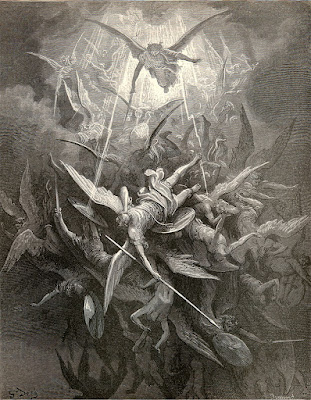

11. LORDIAN GUARD - War in Heaven

"And lo, Michael with sword in hand, he leads the Lordian Guard to slay, to damn"... that one, was the line that stuck in my head the first I listened to this song. It was during the pre-internet era where there was a rumor that "Bill Tsamis is coming back with Warlord". It wasn't Warlord though but the shock of listening to that album was one of the biggest in my life. It still has a very special place in my heart and adding blasphemy to the Christian themes Tsamis was dealing with back then in his lyrics, I listened more often to Lordian Guard than Warlord nowadays. Nothing really bothers me in Lordian Guard and I can't imagine those songs with another voice, arrangements, even "drums". "War in Heaven" is one of the greatest songs Tsamis ever wrote. And no, the version in Warlord's Rising Out of the Ashes is not a better one. The way William has added the keyboards in the Lordian Guard version is unmatchable and perfectly suitable with his guitars, plus Vidonne's theatrical voice sounds like descending from the sovereign sky forth God's command.

Check also: BLACK SWORD THUNDER ATTACK - Evil Sorcery


10. YNGWIE J. MALMSTEEN - I Am a Viking

Speaking of the roots of power metal, what Yngwie Malmsteen did with his first two albums, is one more of the most important steps to the evolution of the genre alongside the early years of Europe. And while in Sweden you have Heavy Load standing at the top of what we're talking about here, "I Am a Viking" is just a pure epic heavy metal masterpiece coming from one of the greatest albums ever made. When maestro Malmsteen was writing music for a line like "I'm a Viking, I'll walk all over you and by my sword you will die", he definitely felt like the ruler of this world. He probably still feels like that even if there aren't any vikings in Florida.

Check also: HEAVY LOAD - Singing Swords


9. BROCAS HELM - Fly High

You can't understand Brocas Helm if you weren't raised with underground metal. And if you joined the epic heavy metal wagon and the underground scene in a later age during the social media, you still can't understand the true essence of underground metal. Sorry, but that's true. Brocas Helm is the ultimate underground metal band. It's not the best, but it's the essence of everything underground metal stands for. Among their catalogue, "Fly High" stands as the ultimate anthem of epic heavy metal with the insane opening lead and its galloping riff. The galloping riff, the riff that sounds like horses riding is one of the elements that makes a song "epic heavy metal" as long as it has the suitable lyrics too. There you go! You have another definition too!

Check also: STEEL ASSASSIN - Spartacus


8. RUNNING WILD - Conquistadores

Running Wild are mostly known for their pirate era, often labeled just as a Heavy Metal band but they really have played almost everything between heavy, speed, power and epic metal until the mid '90s with an unmatchable sequence of 10-rated-out-of-10 albums. And while their heavy metal from 1989 up to 1995 is more "power metal" than the majority of American bands labeled as such, they always had a few raise-fisting epic power metal hymns like "Conquistadores" with its anthemic chorus and the powerful leads that put to shame most of your favourite bands. If someone considers bands like Fifth Angel as "power metal", then Running Wild is ultra power metal. So what's our beloved German band? The ultimate soundtrack to hooliganism, one of the few bands that makes you raise your fist (and sword sometimes) in the air all the time and breaking stuff. Any kind of stuff. "Conquistadores" is an epic heavy metal hymn.

Check also: JAG PANZER - The Moors


7. VIRGIN STEELE - The Burning of Rome (Cry for Pompeii)

Often labeled as the bigger rival of Manowar in the '80s, Virgin Steele that decade didn't really have the "total" epic heavy metal album but they definitely had the songs! Released the same year with Manowar's Kings of Metal, Age of Consent didn't even come close but among a few others it had "The Burning of Rome (Cry for Pompeii)", one of the greatest Virgin Steele songs ever, coming from an uneven album that became better with its 1997 re-release and the addition of bonus material such as the "Perfect Mansions (Mountains of the Sun)" song. While David DeFeis' band met its bottom by entering the '90s with the album Life Among the Ruins and its suitable title, the following albums established them as one of the greatest American epic heavy metal bands. Still though, no one can deny that if you'll make a short list with the best Steele songs, there's a strong possibility most of them coming from the '80s, including the one mentioned here in the top.

Check also: BLACK KNIGHT - Warlord's Wrath


6. OMEN - Teeth of the Hydra

The 3-out-of-3-row-of-albums Battle Cry, Warning of Danger and The Curse is one of the greatest in the field of epic heavy and power metal. The excellent songwriting, the A-male voice of J.D. Kimball, the master riffing and the pounding rhythm section pretty much sum up that advert used to promote The Curse writing "Tired of bands that are better looking than your girlfriend? We have the answer: Omen. True Metal returns to L.A." Having once more the term "true metal" used since the '80s already, The Curse is the better sounding Omen album so far including also one of the best metal drum sounds ever, even if most of the people will give to one of the two previous ones the "best Omen album" tag. No argue with that. Still though, "Teeth of the Hydra" is one of the strongest candidates for "best Omen song". And you can't argue with that, too.

Check also: OVERLORDE - Keeper of the Flame


5. WARLORD - Deliver Us from Evil

There weren't so many metal musicians in the '80s so unique and talented like William J Tsamis. Since the early Warlord songs you always had a different kind of approach in melody and lyricism that's weird how it didn't create a legion of bands influenced by that style. A truly ahead-of-its-time guitarist and composer with an unmatchable guitar tone and style recognizable at once. Huge part of the Warlord's music was always drummer Mark Zonder too, something you can easily understand by listening to "Deliver Us from Evil", one of the most iconic Warlord songs, and Epic Heavy Metal in general.

Check also: AGATUS - Perils of the Sea (Pt II) 


4. MANILLA ROAD - The Veils of Negative Existence

Mark Shelton is one (if not The One) of the most important key figures of epic heavy metal. The third Manilla Road album Crystal Logic (1983) is one of the cornerstones of this so-called sub-genre and Manilla Road is the band responsible for all those epic (heavy) metal bands formed over the last 20 years. The line "I will never put my sword down, I will never run away" is so effective that stuck in your head for eternity from the very first moment. And every time you're listening to one of those classic '80s Manilla Road albums, you rediscover the essence of epic heavy metal. Mark Shelton was always a person that never stopped following the metal scene and always was listening to new bands and albums. From the early Rush-and-Sabbath influenced albums, to the Angel Witch and NWOBHM influence you can catch in Crystal Logic, the Shark never stopped breathing metal, just like that "Metal is dead so I've heard but not while I'm still above ground" line in "Dig Me No Grave" from 1990's The Courts of Chaos. Most bands that were changing in the history of metal music from 1980 onwards, were just getting "softer" and less aggressive, while Manilla Road (with the addition of drummer Randy Foxe) echoed the changes and were getting more aggressive leading to the almost-thrashy Out of the Abyss album of 1988. "The Veils of Negative Existence" is another mythical song in the band's catalogue, that became extremely influential for many bands, including the one you will see in Number 3...

Check also: THUNDER RIDER - Blackwing


3. CANDLEMASS - A Sorcerer's Pledge

Have you ever thought that the album Epicus Doomicus Metallicus is probably the first official time where you see the origin of the term "Epic Metal"? This is definitely the birth of Epic Doom Metal (that wasn't widely used until the '90s) but most likely, it is also the moment when Epic Metal made its first appearance as a term. We're in 1986, Manowar have already started their "Death to False Metal" crusade and since there is "false metal", there's also "true metal" (whatever that means), right? The "true metal" term has also been used in metal magazines and fanzines in the mid '80s but has the term "epic metal" been used before 1986? Is it written anywhere?

We used to keep terms since their first appearance but sometimes this is blurry. For example, Possessed used the "Death Metal" term for their same-titled demo in 1984 and the "Death Metal" song also appears in the Seven Churches album of 1985, so we use to have this as a starting point but already in 1983, editor Bernard Doe of Metal Forces magazine writes, "Hellhammer take the meaning of Death Metal it its extreme" reviewing (burying actually) the Triumph of Death demo of Hellhammer. So, this term is already used. Might happened with Epic Metal too, but it wasn't widely used until Greek Metal Hammer's editor and shady character Charis "Sun Knight" Prasoulas started using that term and later it was spread from Greek metal fans influenced by his texts, around the globe through letters and tape trading, so after a while, you could see this term also used in Italy, Germany and more countries, leading to a whole new underground movement and later, even bands that described their music as "Epic Metal".

Candlemass' Epicus Doomicus Metallicus is the beginning of Epic Doom Metal, but the closing track "A Sorcerer's Pledge" can also be described as one of the greatest epic metal songs ever. A dramatic song separated in three parts. Starting with the acoustic first part that sets the atmosphere, the second epic part of "a tyrant that will conquer, so spoke the wise, of the day when the sorcerer will rise" and the third part that brings the atmosphere of the opening part with the exceptional use of keyboards and the ethereal female anthemic chanting sealing those ancient halls.

Check also: SOLITUDE AETURNUS - Opaque Divinity


2. BATHORY - Song to Hall Up High / Home of Once Brave

There are many Bathory songs you can add here and even if we're talking about two tracks, this will always be one song. Quorthon has managed to shape different metal sub-genres and has been called innovator of both Black Metal and Viking Metal. But his "viking metal" is actually what we can call "Epic Metal" in its purest form. This is not epic heavy metal or epic black metal, this is just Epic Metal. He did it with his albums Hammerheart, Twilight of the Gods, Blood on Ice and both parts of Nordland. So, if viking metal nowadays is something you can call bands such as Amon Amarth, then Bathory is definitely something else, even if Quorthon created this sub-genre.

Music is a form of art. Art has many forms and ways of expression. Art can be a mirror of life, art can be escapism, art can just be the expression and feelings of the artist. The artist's will and/or need to express specific ideas, visions, feelings. And just like there are no boundaries in art, there are also no rules and/or guidelines of how an artist should express its art. Not everyone can understand that a few of the greatest forms of art were created through the feelings and the need the artist wanted to express. Art is not about only following a specific guideline of how you "must" sing, perform, write, paint, act, dance, paint, create. There is not only one way. And Quorthon was a unique artist that never really followed the way you "must" follow, that's why his art will remain forever, creating legions of bands and musicians influenced by him and the sub-genres he shaped. A true artist that surpassed his imperfections with a remarkable epic metal songwriting that breaks the boundaries of simple "songwriting" and becomes a wormhole to an age long gone. 

Check also: ZEMIAL - In Monumentum (Stone of the Ages)


1. MANOWAR - Secret of Steel

The epitome of Epic Metal.


Δευτέρα 19 Απριλίου 2021

The Chronicles of the Sword: A study in the early years and the debut albums of DOMINE and DOOMSWORD.

by Andreas Andreou


You were called by the Gods, their powers to wield. Guard well the Secret of Steel...

...it was the year MCMLXXXIII when Manowar unleashed upon humanity the album Into Glory Ride and the quest for the Secret of Steel started in the world of heavy metal. For the brothers Enrico and Riccardo Paoli, the journey began exactly that year in Piombino in Italy. Enrico on guitar and Riccardo on bass, were joined by Stefano Mazzella on vocals, Agostino Carpo on guitar and Carlo Funaioli on drums. School kids at that moment, they started rehearsing but actually, in the very beginning, they mostly started learning how to play. The passion was there, something that became more serious when they decided to quit playing cover songs and started composing their own original material, leading to the year 1986 when under the name Domine, they recorded their first demo, sometimes referred as Domine, others as Demo 1986, including the songs "Lords of War", "Let the Lightning Strike", "King of All the Kings" and "Eyes of Medusa".

During their early school years, bands like Black Sabbath, Saxon, Kiss, Thin Lizzy and Queen were the ones they were listening to, but Enrico Paoli was also influenced by sword 'n' sorcery novels, horror and authors like Michael Moorcock, H.P. Lovecraft, Paul Anderson, J.R.R. Tolkien, even the Homeric epics and mythology, leading to the epic side of heavy music and the glorious bands of the era like Manowar, Virgin Steele, Cirith Ungol and Warlord. And while band names like Destroyer (inspired by the album of Kiss) and Bloodlust were also used, Domine was the final name they chose, establishing a complete epic aesthetic for the music, lyrics and art. What most people don't know is that the origins of the name come from Pink Floyd's "Astronomy Domine" song but in Latin the word "Domine" definitely sounds epic and perfectly suitable for the band's music.

Enrico Paoli, seeing Manowar live in 1986 and Ozzy Osbourne with Jake E. Lee, believed that the band should be stronger on stage and Domine performed a few live shows supporting bands from Italy like Dark Quarterer who had released their same-titled debut album in 1987 and The Etruscan Prophecy in 1988, and were also based in the same area. In April of 1989, Domine decided to record a professional demo at Much More Studio in Florence, where Italian bands like Sabotage and Death SS were using, since Enrico Paoli never really liked the 1986 demo. Named Champion Eternal, the new demo included "The Mightiest War", "Doomed Lord Dreaming", "Stormbringer, the Black Sword", "May the Rainbow Shine on You", "The Eternal Champion" (a suite in 7 parts) and "Kings in Darkness". Performing a few more shows in Italy and spreading the demo in a few countries like their homeland, Greece and Germany, Domine started building a small underground fan base.

One more demo was recorded in 1991 but this time, Domine didn't travel to Florence for the recordings so the result was a very rough output, mostly recorded live without a proper mixing procedure. Named Bearer of the Sword, the third demo included the tracks "Introduction", "Dark Emperor",  "Midnight Meat Train", "Ghosts, a Poem", "The Ship of the Lost Souls", "Blood Brothers' Fight" and "Uriel, the Flame of God".


At that point, with the Champion Eternal and Bearer of the Sword demo tapes, Domine already had their own style. They didn't sound like the European heavy / power metal bands but they also didn't sound like the heavy / power metal bands from the United States. Maybe you could find a few similarities with bands like Virgin Steele but Domine's epic heavy metal was something different, a league on their own, that was based in songs  composed in a way that could highlight and expand the storytelling, something that was very important for Enrico Paoli, the main composer.

Lyrically, Michael Moorcock’s Elric of Melniboné series is the key influence but Paoli definitely added more stories in the songs, like "Midnight Meat Train'' that is based on Clive Barker's horror story from the first part of Books of Blood collection. For those interested, there is a same-titled film directed by Ryuhei Kitamura (check also his film Versus) in 2008 with (the now famous) Bradley Cooper in one of his first roles, and Vinnie Jones. Paoli himself is a huge fan of horror movies.

The purpose behind the low-budget recording of Bearer of the Sword demo (in a period where recording didn't have the digital and social media world's convenience) was mainly to save money in order to have a properly recorded official release, a 7" single, or a split mini LP , but it didn't happen. Actually, the following period didn't go as Domine probably wanted since a record deal never came but instead, the departure of singer Stefano Mazzella in 1992 and guitarist Agostino Carpo later, is what followed. Despite some negative reviews over the years, Mazzella was a close friend of Paoli and he always believed that he would be improved. Mazzella didn't really want to move on a professional level and that was always Paoli's goal. From that point on, Enrico remained as the only guitarist and the new singer was Simone Gazzola. That line-up recorded the Demo '94 including the tracks "Intro", "The Mass of Chaos", "Rising from the Flames", "Freedom Flight" and "Army of the Dead". Even if this demo is often considered "official", it was a recording that wasn't spread or sold like the previous ones. Gazzola's vocals didn't satisfy the band who kept those recordings as a preview of songs that wanted to properly record for the debut album. However, they already sent a few copies to friends, just to listen to the songs and that's how that demo was spread in the tape-trading years.

The singer's spot was many times what a few reviews found as the weakest part of those demo tapes, something that Paoli has also stated in the past. Gazzola didn't last but drummer and founding member Carlo Funaioli also left Domine, and then the Paoli brothers moved to Florence (they were born there before moving to Piombino). When Paoli started looking for members in Florence, drummer Mimmo Palmiotta joined them, already known from Death SS since he performed in their albums ...in Death of Steve Sylvester (1988) and Black Mass (1989), he was a personal friend of Enrico and they knew each other from the underground metal scene and also played together in the short-lived Italian band, Masterstroke. And then, they were lucky enough to have Morby (born Adolfo Morviducci) joining them as the lead singer after refusing the first time he was asked, when Mazzella left. Previously known as the singer of Sabotage, Morby also sang in Time Machine's Shades of Time EP and we already have reached 1997, the year that Domine's debut album Champion Eternal was finally released.

For better luck, when Enrico Paoli moved to Florence, he started working for Audioglobe, a major distribution record company in Italy and then he founded Dragonheart Records, a division of Audioglobe, and Domine's debut album was released by his own label.


Recorded at Planet Sound Studios in Florence, with songs that were already written during the previous years, Champion Eternal starts with "Hymn", the intro to Domine's world and then... Legions of black cloaks are gathering to "The Mass of Chaos", a song inspired by the horrors of Lovecraft and similar minds, speaking about a sect that summons a Demon God of another dimension through a sacrificial ritual. "The Chronicles of the Black Sword" starts with a small instrumental part named "Doomed Lord Dreaming" and the narration "My name is Elric and I bear the Black Sword" is the beginning of the main part called "Stormbringer (The Black Sword)", an epic and dramatic song about Elric of Melniboné and the sword that drinks the souls of his enemies. "The Freedom Flight" starts with the screams of Michelle Pfeiffer's character named Isabeau in Richard Donner's noble fantasy film Ladyhawke (1985), while she falls off a tower and transforms into a hawk. That epic song about freedom and hope, leads to the "Army of the Dead", a dark epic suite in 5 parts, inspired by sword 'n' sorcery stories, where a city of immortals becomes a city of the army of the dead.

What Domine have managed to do and what separates them from the majority of epic heavy metal bands, is that their stories build the songs. The storytelling becomes the song. An intro that set the mood, a riff that becomes the character, a melodic passage that becomes the character's feelings, the performance, the vocal lines and the way Morby sings, the bass guitar that's always there like the shadow of the guitar that has its own ghostly character, the drums and every beat that could be a clash of swords, marching of warriors, and in the end a redemption or just a dark fate.

"The Proclamation" is a narrated part introducing the "Dark Emperor", a J.R.R. Tolkien inspired story. All narrations of the album are courtesy of Richard J. Burton, an old friend of the band who also narrated in the demo years, while Steve Sylvester of Death SS offers a few backing vocals. There are certain moments where keyboards are really important for the atmosphere and in "Dark Emperor" this is more than obvious since there is a ritualistic aura of terror. "Rising from the Flames" starts with a doomy Sabbathian riff to become another epic that's often overlooked. Being mainly an epic heavy metal band so far, the horror element is very strong in the early Domine years. We've seen it in previous songs of Champion Eternal but in "The Midnight Meat Train" that element is a prowler who few people find slightly out-of-place since it brings terror in the modern era and New York's subway. Still though, who can ignore that deadly riff, Palmiota's speedy pounding and Riccardo's maniacal bass? And finally, the storytelling we mentioned before finds its true essence in "The Eternal Champion", a suite in 7 parts, an iconic epic metal song, an immortal tale, a heroic saga.


The rest of the Domine albums also came out by Dragonheart Records, a few of the older songs of the demo years appeared in them and Domine more or less became a power metal band keeping also the "epic metal" element. There aren't many European epic and power metal bands with such a strong discography but that debut album always has a special place in the heart of those who lived the later demo years and were expecting that album to finally be released. I still remember the day I bought it upon its release and I still remember the first moment I listened to it. And since then, I never stopped following the 8-arrowed symbol of Chaos and what Domine's music represents.


This sword is the backbone of the life that I know...

...listen to the wind, it tells the story. The same year Champion Eternal was released, another band was forming in Gallarate, in Italy, using the name DoomSword. Actually, the idea of forming the band, came when the guitarist of the extreme metal band Agarthi (known as Vali) met Maurizio Chiarello, the owner of the Underground Symphony record label, during a visit in a record store in Milan and everything begun during a conversation about Cirith Ungol. Vali said that he wanted to form an epic metal band inspired by Warlord, Medieval Steel, Cirith Ungol and similar acts, and Maurizio told him that if he does it, he will release the album.

Vali called Avenir, his fellow guitarist from Agarthi and started completing what he said, immediately. Inspired by the cover art of Warlord's Deliver Us MLP, Vali became Deathmaster handling vocals too, and Avenir became Guardian Angel, handling drum duties too. With the addition of Soldier of Fortune (they all used pseudonyms) on bass, Sacred Metal demo was written in a few days and recorded in a few hours, including the tracks "Swords of Doom", "Sacred Metal", "Foredoomed", "Warbringers" and "On the March".

150 copies of that demo were supposed to be pressed but actually 150 covers were made and the manual copying of the tapes stopped after 30-40 copies because the band lost a whole bunch of covers. During the tape-trading circuit, hundreds more were spread-copied to underground metal fans building immediately a strong fan-base. Just like the Domine demo tapes, I remember myself trading (copying) demo tapes of Greek metal bands and getting a tape having the DoomSword demo and a few more goodies of that era.

Prior to DoomSword, there is a brief story lost in time, when Deathmaster was in another band with Guardian Angel and Mario Degiovanni. Formed in 1993, the short-lived band of Warhammer recorded just a few demo tracks and split because Mario wanted to follow a path devoted to Manowar while Deathmaster wanted to add more elements and follow a path devoted to the Asatru period of Bathory. Mario joined Wotan in 1998 and while the third DoomSword album Let Battle Commence (2003) is the most Bathory-inspired album of the band, Deathmaster (using the name Vali) formed Gjallarhorn releasing the album Nordheim in 2005 keeping there all his Nordic and Viking music elements that were closer to Quorthon's music, so DoomSword would never lose their own identity.

Epic metal was very strong in the Mediterranean where Greece was always the leading force of fans back in the '90s, followed by Italy, even if the "epic metal" term in Greece was spread already by a specific editor of Metal Hammer magazine. It doesn't matter if the term was probably occasionally there, it was spread by the articles of that magazine helping building a foundation of underground metal fans that later distance themselves from the mainstream press. Looking back in history, nowadays "epic metal" definitely can be seen as a subgenre and not just a set of mood because of the lyrics. Sometimes it is epic heavy metal, sometimes epic power metal, sometimes epic doom metal but the same-titled debut album of DoomSword is one perfect example of a pure epic metal album.


Recorded at Alex Studio in July-August 1998, the line-up was Deathmaster on guitar and vocals, Guardian Angel on drums and guitar, Dark Omen on bass and Nightcomer on lead vocals. Guitar solos were performed by Deathmaster, Guardian Angel and also guests Gianluca Ferro, Paco Trotta and Alex Festa. The band never performed live with that line-up or during the period of the debut album but singer Gabriele Grilli (Nightcomer) joined DoomSword on stage during their show at Keep It True Festival in 2008. DoomSword's same-titled debut album was released in March 1999 by Underground Symphony.


Opening with "Sacred Metal", the album sets the epic metal mood at once. You know what's going to follow; stories of glory, steel and legends of the past. The chanting of Deathmaster on the intro passes the torch to lead singer Nightcomer and the most natural epic metal feeling one can imagine dominates the album. After the anthemic opening track, they raise the banners higher with the sword-wieldin' metal of "Warbringers" and with "Helms Deep" the battle is raging. Along with writers like Michael Moorcock, Robert E. Howard and J.R.R. Tolkien, the lyrics of DoomSword were also inspired by the writing of Quorthon and Mark Shelton, building small stories within the songs. After the Tolkien-inspired "Helms Deep", in "One Eyed God" DoomSword speak about the Asgardian All-Father and in "Return to Imrryr", the dragon with the black sword, Elric of Melniboné. The songs are epic and melancholic but they don't have yet the barbaric wrath and the dramatic storytelling of the following albums.

In the next albums, DoomSword presented more solid lyrics about mythology, legends, medieval themes, Viking saga and Celtic legacy. Deathmaster also is going to handle all lead vocals from the next album Resound the Horn (2002) where the band had already finalized their epic metal style. But the debut album is a pure and passionate release, an album inspired by specific bands and records and Deathmaster knew that he wasn't ready yet.

DoomSword offered an album by fans for fans. One of the most important releases of the underground metal scene of its time. So important that it was a scene-defining album for epic metal. True and original like very few, just like the excellent version of  "Nadsokor", a Cirith Ungol cover taken from the One Foot in Hell album of 1986. This album is a rare case that stands on its own and it doesn't matter where one will place it in the band's catalogue. "We're the ones, the chosen to wield the swords of doom", they continue at "Swords of Doom" and indeed, DoomSword knew that the SWORD will guide their heart and that was just the beginning; the SWORD was forged.

Closing with "On the March", we're getting a glimpse of the future and the following albums. That song brings upfront the dark epic side of DoomSword, the epic doom metal element that was also present in the future and lyrical themes of siege, vengeance and death.

The marching just began.


Thor Battering the Midgard Serpent painting of Henry Fuseli (German: Johann Heinrich Füssli) that is used as the cover art of the DoomSword debut album. In 1790, Fuseli became a full Academician, presenting that painting as his diploma work.


The author of this blog and Deathmaster, Anno Domini MMX (Up The Hammers Festival 2010), agreed that Hammerheart is the greatest Bathory album. 


Σάββατο 1 Δεκεμβρίου 2018

GATEKEEPER interview - Sword-swingin' Heavy Metal and the Kodex of the Olde.


Gatekeeper from Canada is one of those new bands that you can bet they will shake the foundations of underground metal. Been also fans and active part of underground, they've seen already many battles and Geoff Blackwell, leader and keeper of the gate talks to Crystal Logic about everything!

" I started writing music for Gatekeeper in 2010 while living in Edmonton. It originally started as a fun way for me to teach myself guitar and play some barbaric heavy metal riffs that were different from the other bands I was playing in at the time. As I was writing songs I figured it would be fun to get a couple friends to play on it, maybe some guitar solos and some singing, anything I couldn't do myself. I put up some demos on YouTube and MySpace and had a logo made up and was playing the super-cult, obscure card because I was into those sorts of underground bands and wanted to do something similar. I wasn't taking it too seriously at the time.
As time went on, some people in bands that I admired and respected started getting in touch with me about the band. Eric from Argus was the first, then Matt Barzegar from Funeral Circle and Manuel Trummer from Atlantean Kodex as well. After talking with these people and hearing other positive reactions, I figured that it might be worth making Gatekeeper into an actual band. So I called up some friends who were playing in other bands and get them on board to record our first EP and play the first batch of live shows. It was just a side-project for everyone at this point.
After a few more years and a handful of other smaller releases I made the decision to move to Vancouver and both the split vinyl records with Eternal Champion and Funeral Circle were released during this time.
After about a year of living on the west coast I met the guys who would eventually become the current Gatekeeper lineup. David (bass) was playing in the awesome band Manic Strike and he was already a fan of Gatekeeper to begin with. When Guardians of the Northwest asked us to play their festival in Portland, USA we decided to put together a live lineup. This lineup was Tommy and Kenny (drums and lead guitar), and we called up Jean-Pierre who had been living in Vancouver for a few months while working on Spell's album and he agreed to sing for us.  We took two months to rehearse for the shows and the madness began. "

You have released split singles, EPs and more stuff over the last years, but 'East Of Sun' is the first full-length album of the band. What took you so long?
 
I think the main thing that held us back was timing, and how serious we were. It took an incredibly long time just to record the first EP and there were so many problems with that process. So even though I had a lot of songs written and demoed, I felt that trying to record a full length album with the old lineup wouldn't have been worth it. Smaller releases suited our work-flow better.
When we got back from that first tour with the west-coast lineup, Tommy and Jean-Pierre both expressed their interest in staying with the band full-time. In fact it was actually JP's idea to record a full length album. We had some border trouble going back into Canada on our way back from the first tour and JP was forced to stay behind in the USA. He called me after getting held at the border for hours and told me how much fun he had with us and that he wanted to do an album with as soon as possible.
We started working on the full-length from that point onward. I think we all saw a lot of potential in what we had done in our short time together and it reamy bandmates, I started hearing “OK, how do we pull this off?” We started writing some songs as a group, rehearsing twice a week and JP even moved to a different city for us. He actually lives with me in Vancouver now.

Some of the songs included herein like 'North Wolves', 'Bell Of Tarantia' and 'Swan Road Saga', are known to the ones that follow the band. When was the majority of the album written? Did you have a "plan" when you were recording the album that it should move to a specific direction?
We really wanted to take advantage of the momentum of the band and when it came time to hit the studio, we decided that the album should be a complete representation of what the band sounds like now, at this period of time. We had a couple new songs written by the band as a whole, and I had older, unused material which the rest of the band helped me arrange. Lastly, we decided to include a few previously recorded songs because they were still commonly found on our live setlist. I'm personally much happier with the newer versions of the songs. The performance on the band is stronger and JP really delivers on his vocal performance. He even re-wrote the vocals from 'North Wolves' from scratch and now I think it's one of the coolest tunes on the record because of it.
So to sum to the first part of the question, the songs for the album date back as early as 2010 or 2011 and come all the way into 2017. However, the arrangements of all the songs are fresh and even more inspired to me than when I first wrote them.

How was the recording process of 'East Of Sun'? 
It started out great. We booked four days in the studio with Mike Rogerson to do the drums and we ended up getting drums, bass and early takes of rhythm guitars and vocals in that time, plus the two cover songs. After that it was more painful as we were working through a recording school and our schedule was limited—we had to work around the students at the school and often had to wait for weeks or even a month between sessions. I did many all-night recording sessions for the guitars. I would work all day, then record my guitars from 9pm to 6am, go home, make breakfast, go back to work, repeat. It was insane but thanks to the tenacity of the band and our incredibly talented assistant engineer Angelo Boose we got it done.

Your musical inspirations are quiet obvious and they are not just from classic 80s bands like Omen but also from newer bands like Atlantean Kodex. Tell us about them and how would you describe your music to someone that is not familiar with Gatekeeper?
I tell people that we play sword-swingin' Heavy Metal. Bands such as Omen, Manowar, viking-era Bathory, Manilla Road are key influences. Of course Atlantean Kodex and Solstice were also massive inspirations to me, especially in the early days. Another massive influence is the great Twisted Tower Dire, one of the best US-metal bands ever. I have huge respect for them. And then there are the Sword Brothers, Ironsword and Doomsword.
These days I try not to be too specific with where I get my influence and ideas from—I'm listening to a lot of different stuff these days and I want to stretch our Epic Heavy Metal tag as far as it will go. I don't think we'll ever totally break away from that area, but we want to push the boundaries of it. Lately I look to Dio, Fates Warning, Savatage, Mahavishnu Orchestra, King Crimson and Return To Forever for inspiration.

There is a new wave of epic metal bands coming from United States (and Canada) with Gatekeeper, Eternal Champion, Visigoth and more. How is the current metal scene in North America? Which bands do you distinguish? It appears that there is something boiling and ready to explode but do you think that it will break through or it will remain underground?
There are a lot of cool bands in the North American underground right now. The scene has been blossoming a little bit these days with lots of cool festivals popping up and bands starting to get more notice and appearing on European soil. There aren't many other Epic Metal bands in this part of the world but Cromlech and Emblem come to mind and Smoulder is good, a bit more doom metal. For more traditional metal I like Substratum, Riot City, Skelator and our friends from Spell. Manacle from Canada is also very good with an authentic 80's metal sound. JP also did a demo with the band Traveller recently which is very well done, it's got members of Hrom and Gatekrashor. And of course, Night Demon are the busiest band on the planet right now and doing fantastic work for the metal scene as a whole.
If I'm speaking honestly, I don't think that North America, on a geographical and cultural level, is set up for our kind of music to succeed. We're seeing a resurgence now and it’s pretty great but I don't see another 1983 US Festival happening anytime soon. It's the cycle of life in culture and fashion—an object becomes popular and has mass value. Then it becomes old, is discarded and becomes niche. It might get picked up again and reclaim retro value, but that's a different kind of value.
The good news is that there will always be young people out there. This kind of music can always be fresh and new and exciting to someone, so I hope that people continue to do their part by showing their favorite music to their friends and loved ones. Play your favorite albums for your kids, buy them a guitar for their birthday, send them to music lessons, go see a gig.

However, speaking of underground, do you think that underground can be the new mainstream and what's your view on "underground" and heavy metal music nowadays? There are many many new traditional metal bands out there, various festivals appear everywhere, older bands reunite (even with just one "cult" album), there is a vinyl hype, and cassette tapes return and everything 80s-related seems cool...
To me this idea of the “underground” becoming “mainstream” is an illusion. It has its retro appeal and it's stronger now than it was 20 years ago which is great, but all the numbers that these bands and festivals deal with are small, relatively speaking. I don't really have an issue with any of these things returning—they were a part of my growth and I think they're pretty cool to begin with. I'm more worried about the glass-ceiling effect of our niche scene and the effect this might have on newer and younger bands. I also worry about people who pigeonhole their sound too much from the start and feel the need to start a completely different band if they want to express even something remotely different. I know people in Vancouver who have four different projects going that sound similar enough that they could have taken all those ideas, effort and budgets and turned them into a single, more interesting band. I feel like most local scenes these days consist of a crew of people playing on each other’s solo projects. I'm more interested in hearing collaborative efforts—bands that become more than the sum of their parts.
The other side of this question concerns what people place value on. I feel that nostalgia is one of the greatest cultural exports of our generation. People in my age category will spend days’ worth of free time re-watching some shitty sitcom that aired when they were a kid just to feel some twinkle of childhood wonder again. People love to look backwards. It's comfortable and reliable and you generally know what to say or think about the past because it already happened. The future is unpredictable and scary, so I don't blame people for this behavior. Sometimes though, you just gotta look at a new development and ask yourself “what would Miles Davis do?” and embrace it. Unless it involves beating your wife. Don't do that.

What does it take for a new metal band to survive?
Tenacity, discipline, motivation, a willingness to sacrifice, a team-player attitude, rich parents, government stipends, a bassist with a generous car accident settlement, a sugar-momma/daddy, a liver made of concrete and the ability to find the joy and humor in every situation no matter how bleak or boring or shitty it might be. I like to think that it also helps to not be a crazy asshole too.


On February 22nd, 2019, Cruz Del Sur Music will release Gatekeeper's "Grey Maiden" EP and Sanhedrin's new album "The Poisoner".
Both releases will be available in time for the tour A Shadow Over Europa where both bands will storm the gates of cities like Hamburg, Berlin, Newcastle, London and Athens.